PRP is one of the most asked-about treatments in my clinic, and one of the most over-promised on the internet. The honest version is more useful than the hype: for the right knee, at the right point in a plan, it can help — and for the wrong one, it does very little.
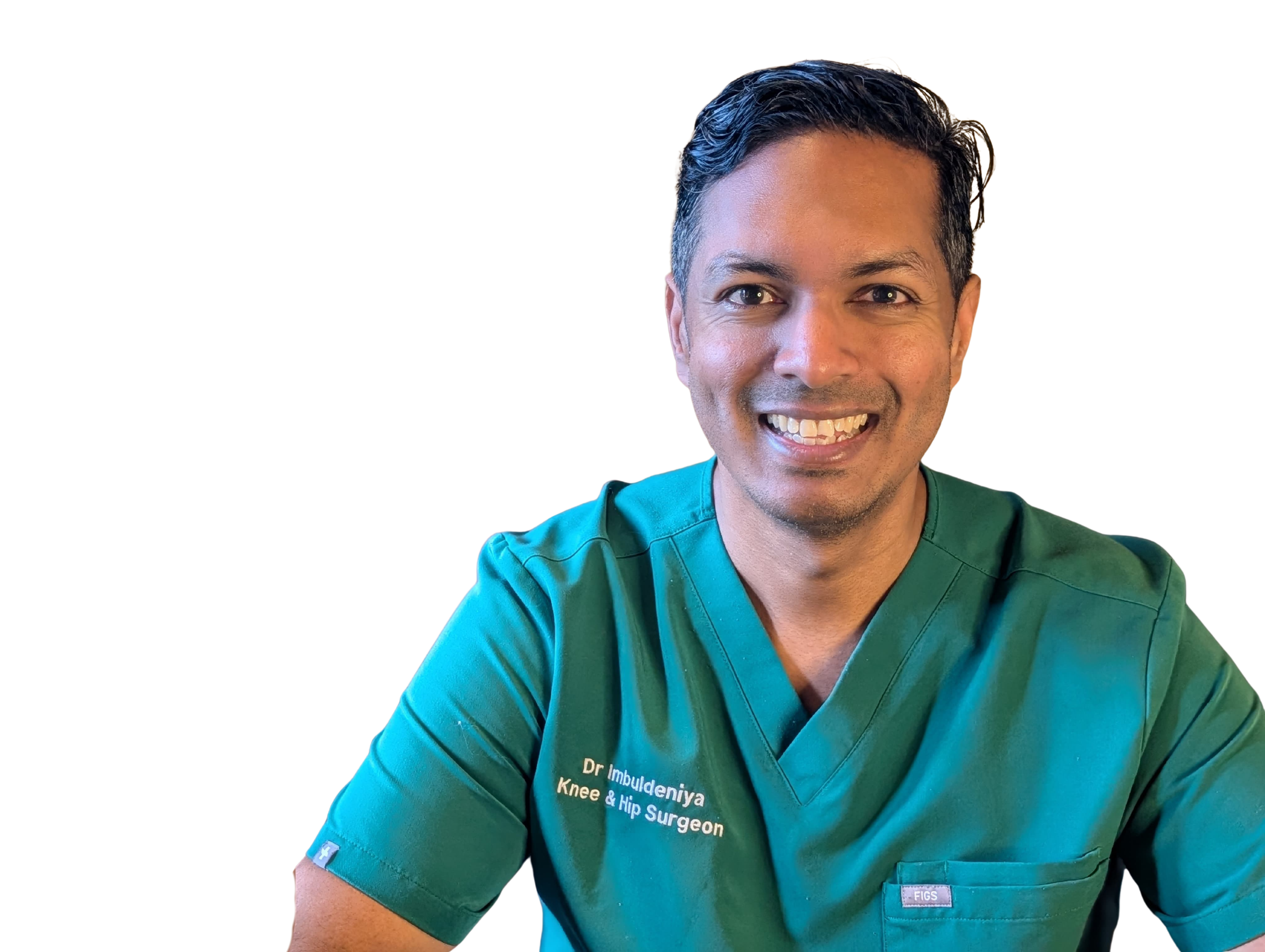
I'm Dr Arj Imbuldeniya, a Consultant Orthopaedic Knee & Hip Surgeon. I use orthobiologics including PRP in selected patients, and I also turn a great many people away from injections because their knee needs something else first. So this isn't a sales pitch for PRP, nor a dismissal of it — it's where it genuinely fits.
What PRP actually is
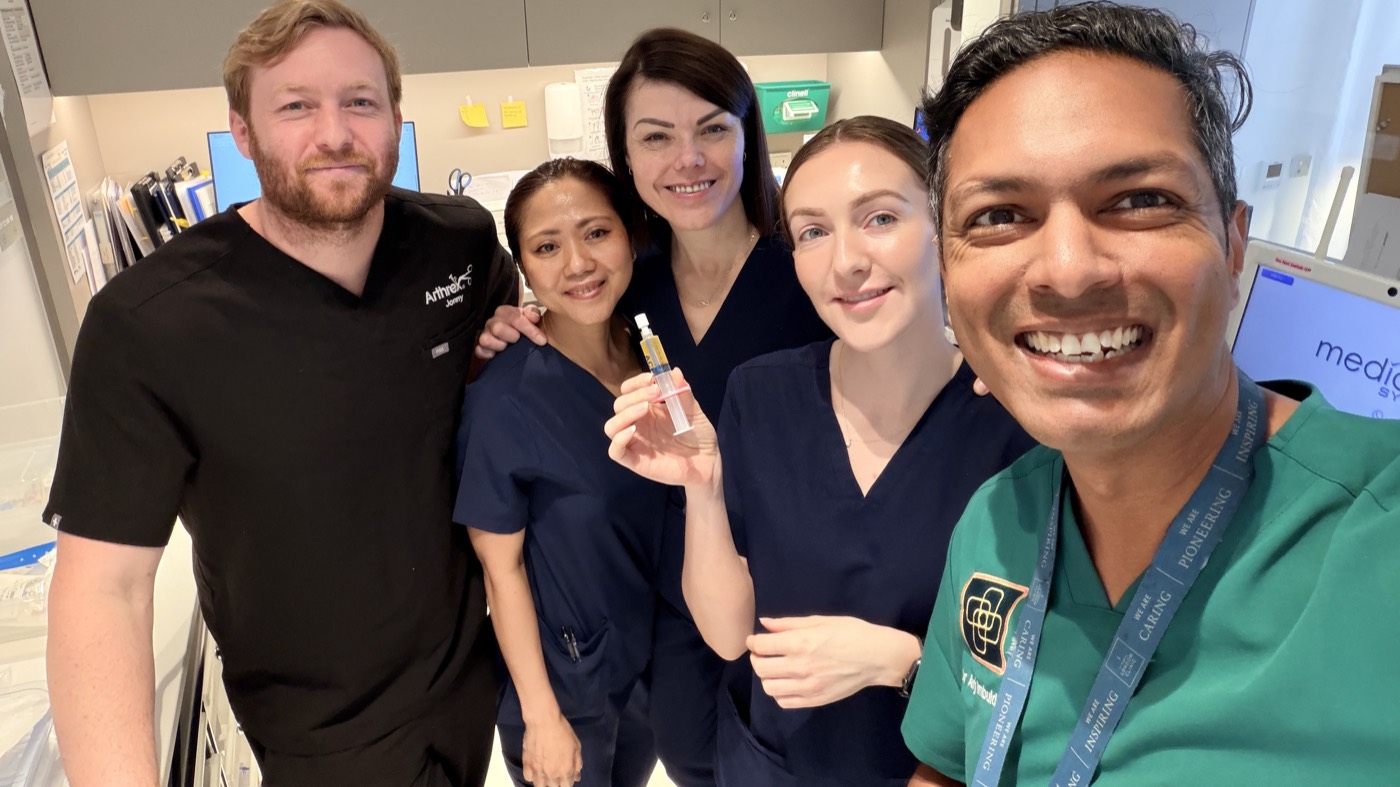
PRP stands for platelet-rich plasma. A small sample of your own blood is concentrated to increase the platelets — the cells that carry many of the growth factors involved in healing and in calming inflammation — and that concentrate is injected into the joint. The idea is to shift the biological environment inside the knee in a more favourable direction.
It's just as important to be clear about what PRP is not. It does not regrow a worn cartilage surface, and it cannot rebuild a joint that is structurally beyond saving. It influences the environment around a knee; it doesn't manufacture new structure. Holding both of those truths at once is the start of using it sensibly.
PRP is both over-sold and under-used
The conversation around PRP tends to collapse into two unhelpful camps. One sells it as a miracle that lets you sidestep every other kind of work. The other dismisses it entirely as expensive placebo. Both miss the truth, which sits in between.
This mirrors a bigger pattern I see across knee care: it fails in two opposite directions. Treatments get reached for too eagerly when the groundwork hasn't been done — and they get withheld from people who'd genuinely benefit. PRP is a good example. Used as a first-and-only move it usually disappoints; used at the right moment, in a prepared joint, it can earn its place.
So — does PRP work for knee arthritis?
Here's the honest evidence picture. PRP is not a single, standardised product, and knees are not all in the same condition, which is exactly why the published results look so mixed. Broadly, PRP tends to do most for earlier-stage arthritis in a joint whose surrounding biology has been addressed, and least as a stand-alone treatment in an advanced, deconditioned knee. The benefit, when it comes, is about comfort and function for a period of time — not a structural cure.
I won't quote a protocol, a number of injections or a price in an article, because setting those out generically would be misleading — they depend entirely on the individual knee and the wider plan. Be wary of anyone who offers you a fixed course of injections before they've properly assessed you.
Where PRP fits in a sensible plan
At OrthoLongevity we work on a single principle — biology-first, surgery-last — and we don't stack treatments at random; we sequence adaptation. PRP belongs in the augment stage, after the foundations are in place, not at the front of the queue:
- Reset biology first — metabolism, inflammatory load, sleep, stress and nutrition. An injection into an inflamed, poorly controlled system has the odds against it.
- Build the muscle — strength training is the single highest-evidence tool for protecting and offloading a knee. No injection substitutes for it.
- Restore movement — how the joint moves changes what it can tolerate.
- Then augment — targeted orthobiologic treatment such as PRP, into a joint that has first been biologically prepared. The sequence matters more than the injection.
This is deliberately gate-governed: no injection is offered as an opening move. PRP is one tool among several — including hyaluronic acid and other options — and which, if any, suits you is a clinical judgement made after assessment. I've set out the full pathway, and the joint-preserving surgical options beyond injections, in Alternatives to Knee Replacement.
Can PRP help you avoid a knee replacement?
Sometimes it can be part of what delays or removes the need for a replacement — but rarely on its own, and never as a guarantee. In my own practice over the last two years, 8 in 10 of the patients I saw did not go on to surgery, not because of any single injection, but because the whole biology around the joint was addressed in time, with treatments like PRP playing a supporting role rather than a starring one.
And some knees do genuinely need replacing. For those, no injection changes the structural reality, and delaying a needed operation out of hope pinned on PRP causes its own harm — more pain, more lost muscle, a harder recovery. I see myself as a selective surgeon, not a reluctant one. The aim is the right intervention at the right time, whether that's an injection, strengthening, or an operation.
PRP is a clinical decision, not something to buy off a menu. Every OrthoLongevity assessment begins in person at Lanserhof at The Arts Club in Mayfair, where the stage of arthritis, your strength, metabolic health, movement and genetic risk are weighed together — and where orthobiologic treatment, if it's genuinely the right call, is carried out into a properly prepared joint, as part of a plan rather than in isolation.
Start by knowing where your knee actually stands
Before booking any injection, the most useful first step is an honest sense of how your knee is really doing and how much modifiable biology you have to work with — because that, more than anything, predicts whether something like PRP is worth considering. That's what the free Knee Age test is for: a 60-second, surgeon-designed self-assessment that estimates the biological age of your knee and points to the drivers that matter most for you. The thinking behind it is explained in What Is Your Knee Age?
If you take one thing from this article, let it be this: PRP is a tool, not a verdict or a shortcut. Whether it belongs in your plan is a question to answer after you understand the knee it would be going into.